Commercial & Industrial Off-Grid Solar Mounting Accessories & Controllers
Engineered for structural stability and smart power management—delivering hot-dip galvanized mounting steel, extreme wind resistance, and high-conversion MPPT control.
Heavy-Duty Mounting Systems & Smart Controllers for Solar Infrastructure
Commercial-grade Q235 hot-dip galvanized mounting steel and intelligent MPPT controllers built to maximize structural durability and energy conversion across all off-grid lighting installations.
Q235 Galvanized Steel
Smart MPPT Tech
20+ Years Durability
Lumin Solar Solutions provides commercial-grade mounting hardware and structural support systems engineered for extreme outdoor environments across diverse commercial application scenarios. Fabricated from high-strength Q235 steel with hot-dip galvanization, our mounting arms, split/integrated poles, and anchor base cages deliver superior wind resistance and 20+ years of maintenance-free anti-corrosion protection. Complementing our structural hardware, our intelligent MPPT solar controllers ensure maximum energy conversion and seamless compatibility across all Solar Street Lights and outdoor luminaires. For custom mounting specifications or pole wind-load calculations, consult our team via Engineering Support.
No matching results found
Product categories
Solar Lighting Components & Controller Models
Browse our high-efficiency MPPT charge controllers, Grade-A LiFePO4 battery modules, and heavy-duty Q235 galvanized mounting hardware.
Showing all 4 results
Built for structural reliability and system intelligence — engineered for high-grade galvanized mounting, extreme wind-load resistance, smart MPPT power management, and seamless system integration.
Applications & Scenarios
Engineered off-grid solar lighting solutions designed to meet the performance, reliability, and application requirements of commercial, municipal, and industrial projects across diverse outdoor environments.
Our solutions are organized by application scenario, ensuring optimal system configuration, lighting performance, and long-term operational reliability for each project type.
From municipal infrastructure to residential and off-grid environments, each system is engineered for real-world conditions and project-specific demands.

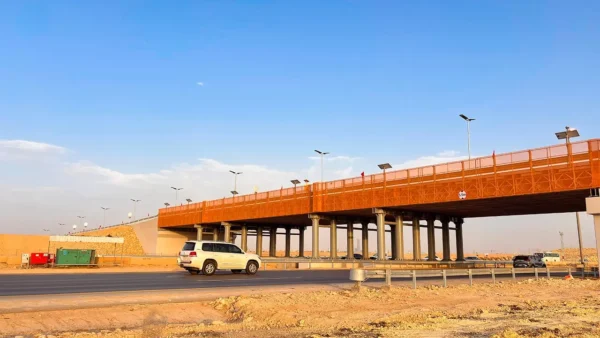
Municipal Roads & Highways
Off-grid solar lighting solutions for municipal roads, highways, and arterial routes, delivering high-lumen output, stable light distribution, and long-term reliability for public infrastructure projects.
Recommended Catalog:
📎 Solar Street Lights Catalog
👉 Need a lighting layout for this scenario? Get Free Support
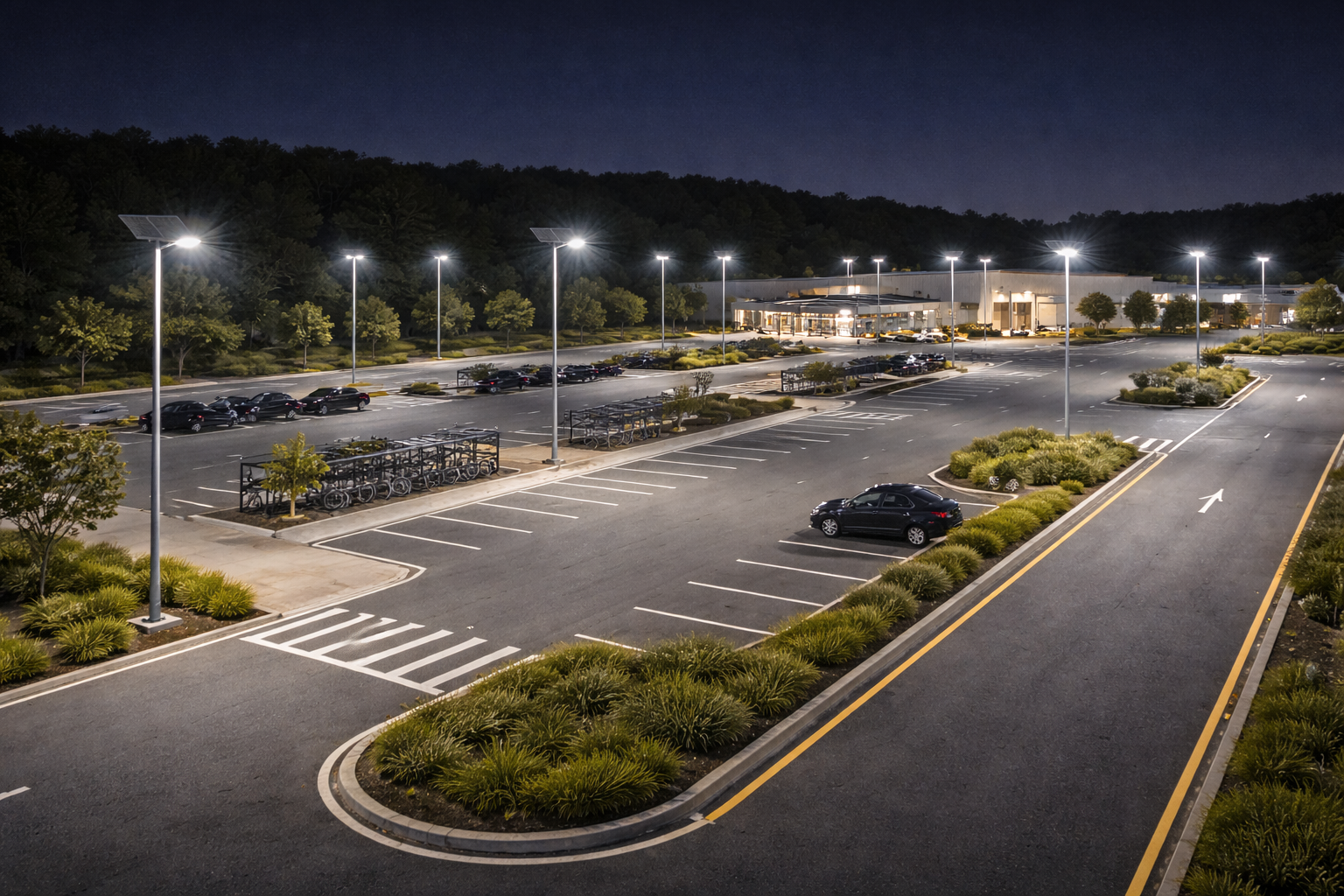
Public Areas & Parking Facilities
Solar lighting systems for parking lots, transport hubs, campuses, and public facilities, providing uniform illumination, enhanced safety, and dependable night-time visibility in commercial and civic environments.
Recommended Catalog:
📎 Solar Outdoor Lights Catalog
📎 Solar Flood Lighting Solutions – Overview
👉 Need a lighting layout for this scenario? Get Free Support
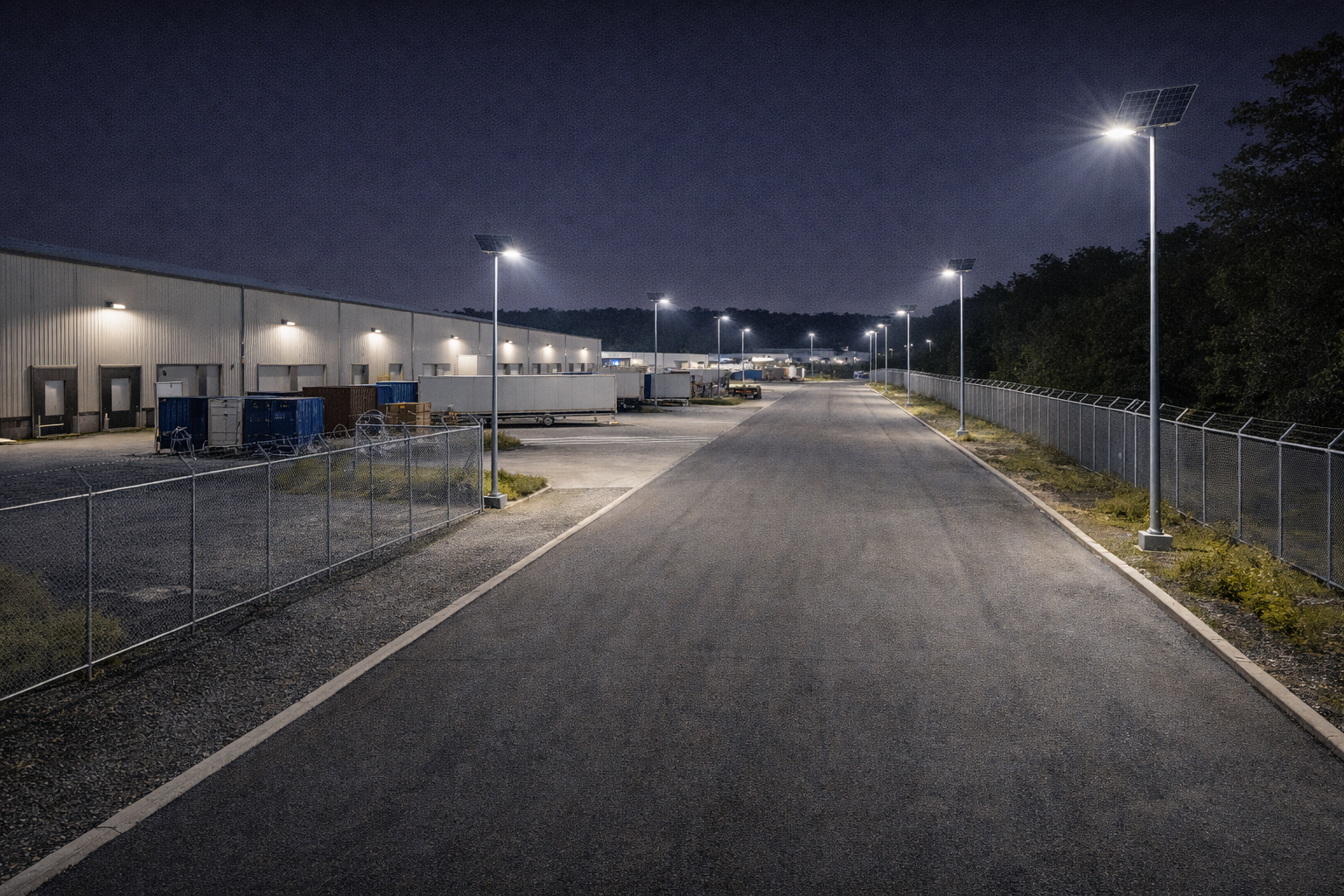
Industrial Zones & Facility Perimeters
Durable solar lighting for industrial parks, logistics zones, and facility perimeters, engineered for demanding environments requiring reliable illumination, low maintenance, and continuous operation.
Recommended Catalog:
📎 Solar Outdoor Lights Catalog
📎 Solar Flood Lighting Solutions – Overview
👉 Need a lighting layout for this scenario? Get Free Support
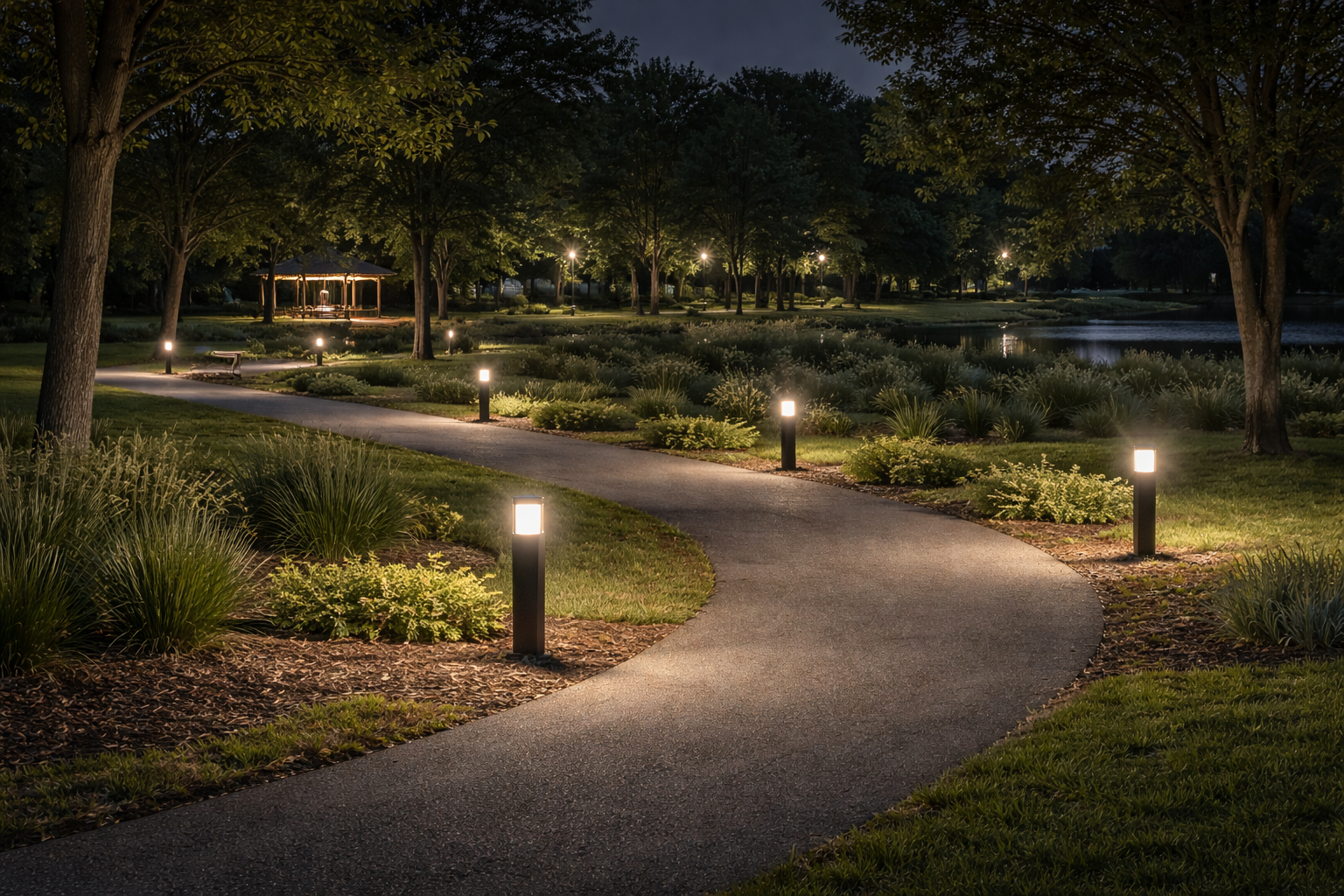
Parks, Pedestrian Areas & Landscaped Spaces
Energy-efficient solar lighting for parks, pedestrian pathways, and landscaped public spaces, offering comfortable illumination while enhancing environmental aesthetics and visitor experience.
Recommended Catalog:
📎 Solar Outdoor Lights Catalog
👉 Need a lighting layout for this scenario? Get Free Support
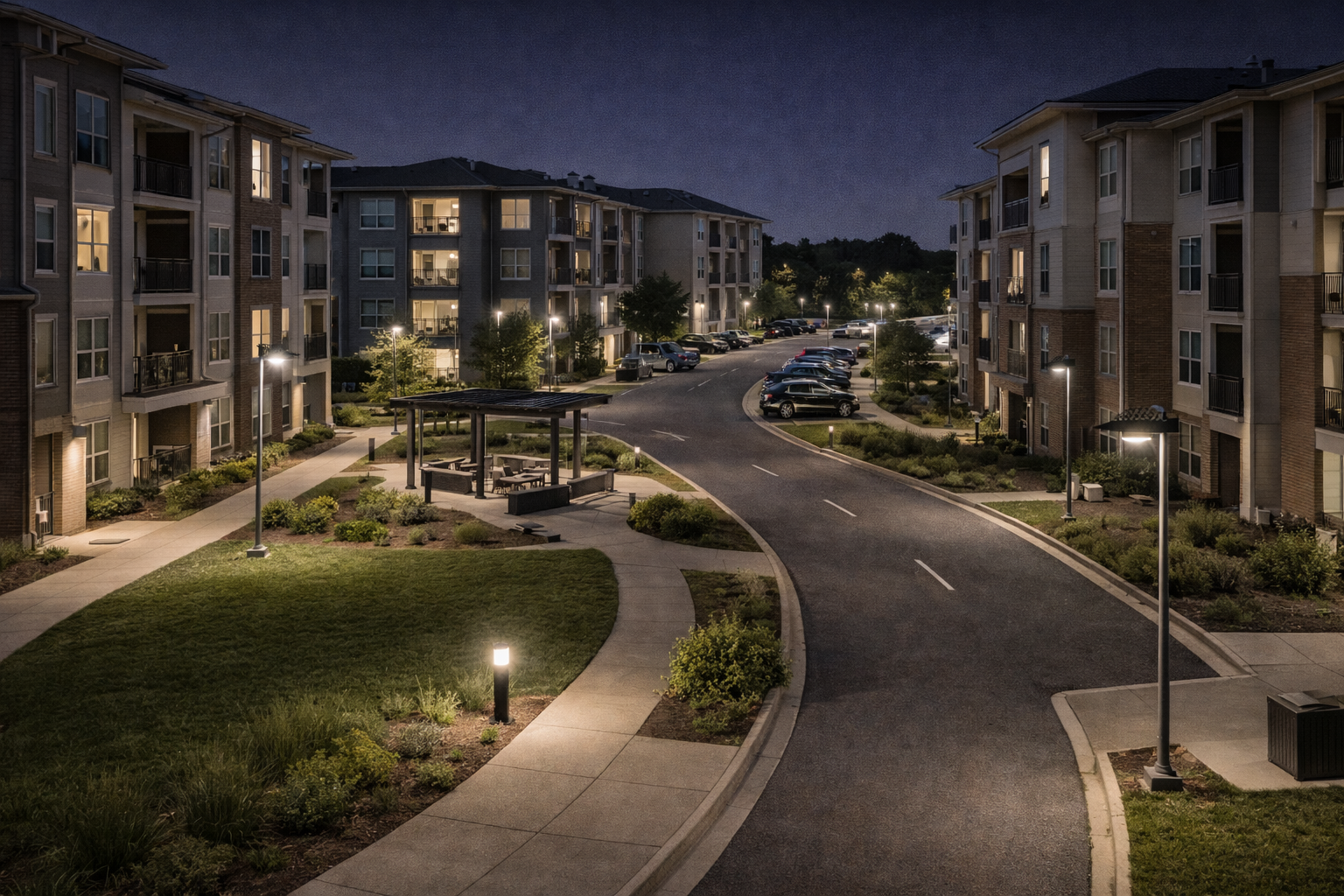
Residential Communities & Mixed-Use Developments
Solar lighting solutions for residential roads, courtyards, and mixed-use developments, balancing functional safety lighting with visual comfort and architectural integration.
Recommended Catalog:
📎 Solar Outdoor Lights Catalog
👉 Need a lighting layout for this scenario? Get Free Support
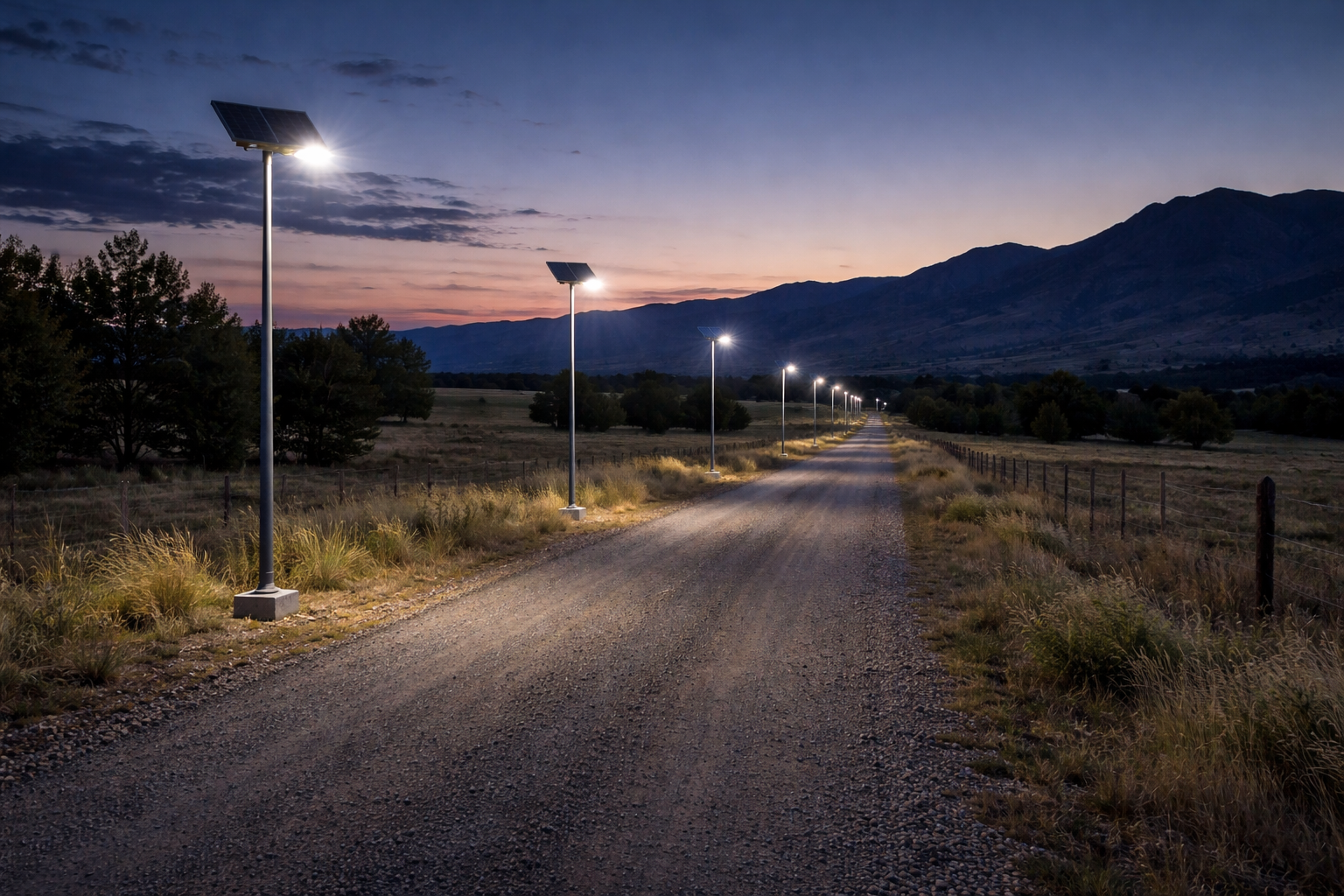
Remote & Off-Grid Infrastructure
Off-grid solar lighting designed for remote regions, rural roads, and infrastructure projects without grid access, ensuring reliable illumination in challenging locations.
Recommended Catalog:
📎 Solar Street Lights Catalog
📎 Solar Outdoor Lights Catalog
👉 Need a lighting layout for this scenario? Get Free Support
Need Help Choosing the Right System or Catalog for Your Project?
Our engineering team provides free technical selection support.
Skip the Trenching. Eliminate Energy Bills.
Calculate your 5-year project ROI below and see how much your facility can save with Lumin Solar Solutions.
Private Project ROI Calculator
💡 Pro Tip: Switching to solar allows you to eliminate trenching costs and expensive cabling.
Estimated Annual Energy Savings:
$0.00*Based on replacing 150W traditional lamps running 12hrs/day.
Traditional Grid vs. Lumin Solar Lighting Solutions Cost Analysis
| Project Cost Items (30 Units) | Traditional Grid | Lumin Solar Solutions |
|---|---|---|
| Trenching & Labor | $3,000 - $8,000 | $0 (No Digging) |
| Cabling & Wiring | $2,500 - $5,000 | $0 |
| Transformer/Switchgear | Essential Infrastructure Cost | Not Needed |
| Electricity Bill (Annual) | $1,500 - $2,500 | $0 (Free) |
| Installation Time | 7-14 Days | 1-2 Days |
| Total Hidden Costs | EXTREMELY HIGH | ZERO |
*Calculated based on average private industrial projects. Lumin Solar Solutions eliminates infrastructure overhead.
Why pay for copper wires and manual labor when you can invest that budget into high-quality solar technology?
Your Assurance of Quality & Safety
Internationally Recognized Certifications
Our Credentials Ensure Your Peace of Mind:
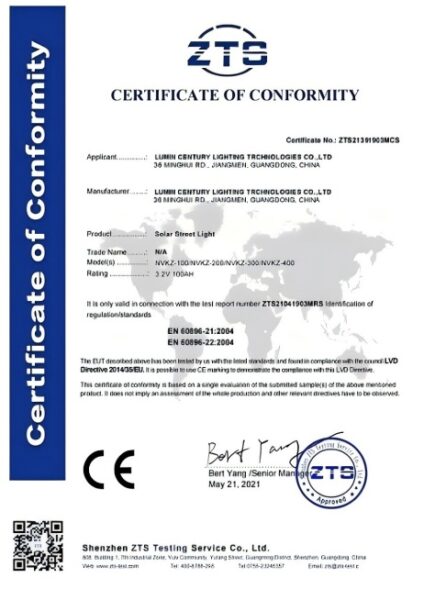
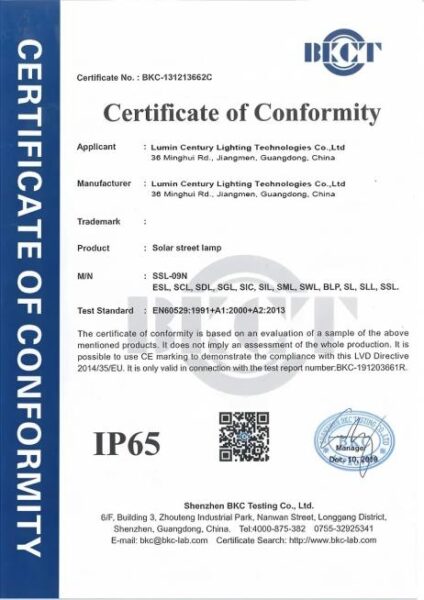
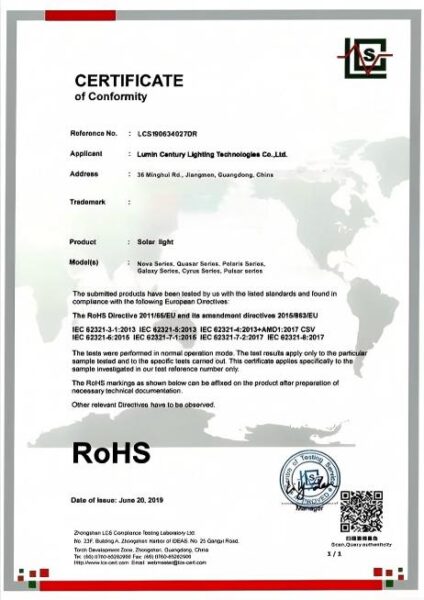
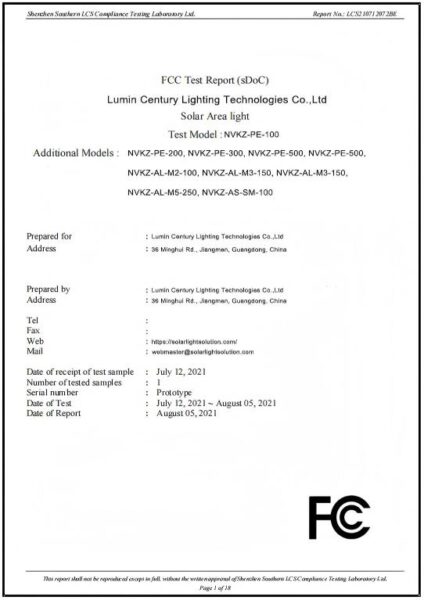
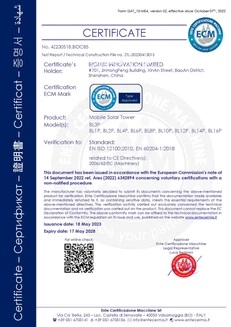
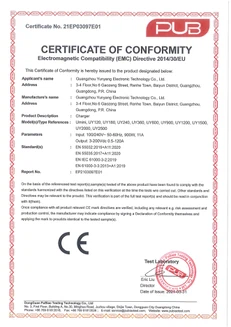
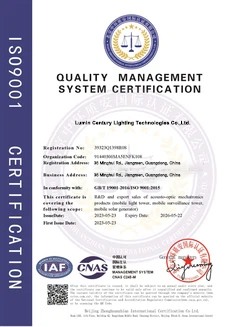
We are ISO 9001 certified for quality management. Our products hold major international certifications including CE, RoHS, ETL, and IEC, and are designed to meet region-specific standards. This means proven performance and seamless acceptance, whether your project is in a mature or developing market.


Our Commitment to Reliability
Inside the Factory: Testing & Validation
Our commitment is rooted in our vertically integrated 5,000㎡ modern factory and advanced in-house R&D Laboratory. Here, we validate every product through tests like IP67/68 submersible testing, EMC immunity checks, and extreme temperature cycling.

Solar Panel IV Curve Test
Automated IV curve tracing under Standard Test Conditions (STC) per IEC 61215 and IEC 61730 standards. We rigorously verify peak power output, fill factor, and electrical efficiency to guarantee a positive power tolerance (+3%) on all PV modules.

Automated Dispensing
High-precision CNC robotic dispensing for polyurethane and silicone sealant application across luminaire housings and optical lenses. Ensures seamless IP66/IP67 ingress protection and long-term weatherproofing in extreme outdoor environments.
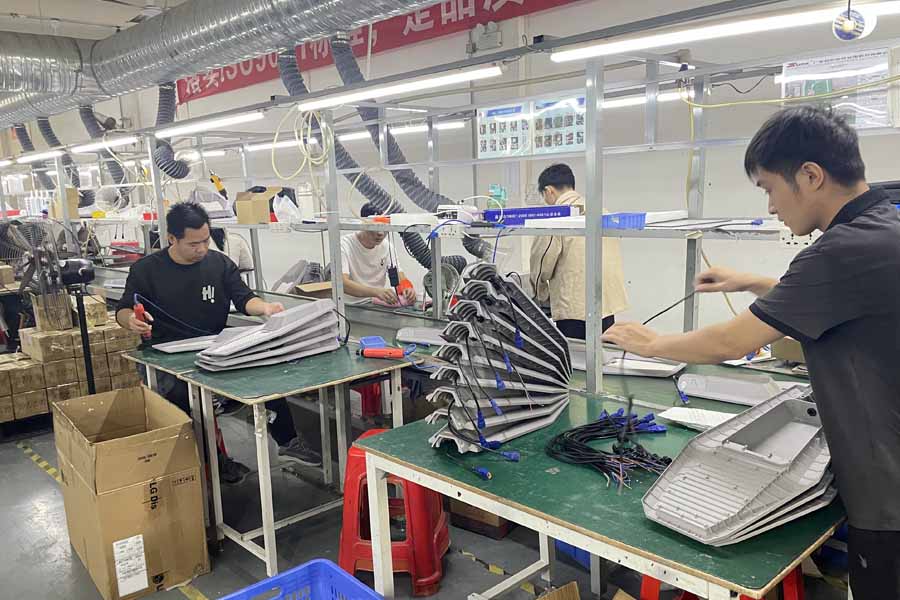
Assembly Line
ISO 9001-certified standardized assembly with strict ESD anti-static controls and lean workflow. Every finished solar fixture undergoes 100% full-load aging and burn-in testing prior to packaging to ensure batch-to-batch consistency for municipal tenders.

IP65/66 Water Jet Test
Rigorous ingress protection testing inside IEC 60529-compliant spray test chambers. We subject outdoor solar luminaires to continuous high-pressure water jets and dust exposure, validating official IP65, IP66, and IK10 impact resistance ratings.

Photometric & Colorimetric Test
Optical and electrical performance analysis using high-precision integrating spheres and spectroradiometers compliant with LM-79 and LM-80 standards. We measure lumen output, CCT, and CRI, generating official IES files for DIALux lighting simulations

Battery Protection Test
Comprehensive safety and reliability testing for LiFePO4 battery packs and smart BMS controllers under UN38.3 and IEC 62133 standards. Simulates extreme overcharge, over-discharge, and thermal cycling to guarantee 2,000+ deep-cycle lifespan.
Illuminating Success Stories Worldwide
See Our Products Powering Projects Globally


Community Safety Lighting: NV Series Street Lights for S2 Heights Village Roads

Thailand Farm Solar Lighting: Waterfront Illumination with “Moon in Water” Garden Lights
High-Temperature Municipal Street Lighting Project, Dubai
Illuminating the New Port of Ndayane: A Landmark Solar Lighting Project, Senegal

Coastal Illumination Upgrade: Solar Flood Lighting for Australian Seaside Accommodation
Frequently Asked Questions (FAQ)
What steel grade and anti-corrosion standards ensure a 20+ year pole lifespan in coastal or high-humidity environments?
Commercial solar light poles require structural-grade steel combined with hot-dip galvanization conforming to international standards such as ISO 1461 or ASTM A123 to resist severe atmospheric corrosion.
Material Specification: Fabricated using Q235B or Q345B structural steel, providing a minimum yield strength of 235 MPa to withstand dynamic mechanical stress.
Hot-Dip Galvanization: Internal and external immersion in molten zinc produces a protective zinc-iron alloy coating with a minimum thickness of 80 to 100 μm.
Corrosion Resistance: Achieves ISO 12944 C4 to C5 industrial corrosion classification, ensuring over 20 to 25 years of maintenance-free service life in marine and industrial environments.
Surface Coating: Optional thermosetting polyester powder coating (60 to 80 μm) offers UV resistance and customizable RAL color matching.
How is solar street light pole wind resistance calculated for hurricane-prone regions?
Pole wind resistance is calculated based on the total Effective Projected Area (EPA) of mounted solar panels and luminaires using AASHTO or EN 40 structural design standards.
Wind Speed Rating: Commercial poles are structural-engineered to withstand maximum gust velocities from 35 m/s up to 60 m/s (approx. 126 km/h to 216 km/h).
EPA Factor Calculation: Accounts for surface aerodynamic drag from PV panel inclination angles (15° to 30°), arm bracket offset distance, and luminaire weight up to 80 kg.
Structural Tapering: Conical or octagonal tapered pole profiles reduce drag coefficients by 15% to 25% compared to uniform cylindrical steel pipes.
Deflection Limits: Maximum pole top deflection is restricted under maximum design wind load to prevent mechanical fatigue and structural joint failure.
Why are MPPT charge controllers preferred over PWM controllers in commercial off-grid solar lighting?
Maximum Power Point Tracking (MPPT) controllers harvest significantly more energy than Pulse Width Modulation (PWM) units, maximizing solar charging efficiency under varying climate conditions.
Conversion Efficiency: MPPT technology achieves peak tracking efficiency up to 99.9% and energy conversion efficiency above 98%, compared to 70% to 80% for PWM.
Energy Yield Gain: Delivers 15% to 30% higher daily charging current, especially during low solar irradiance, cloud cover, or winter months.
System Voltage Step-Down: Dynamically matches higher solar panel array voltages to 12.8V or 25.6V LiFePO4 battery pack charging parameters.
Thermal Operating Range: Built with aluminum heat-sink enclosures rated IP67 and operating reliably from -35°C to +65°C.
What foundation anchor bolt specifications are required for mounting 6m to 12m solar light poles?
Solar light pole foundations require pre-fabricated steel J-bolt cages embedded in reinforced concrete designed for site-specific soil bearing capacities and overturning moments.
Anchor Bolt Sizing: High-tensile grade 4.8 or 8.8 steel bolts ranging from M18 x 500 mm (for 6m poles) to M24 x 1000 mm (for 12m poles).
Galvanized Protection: Anchor bolts feature hot-dip galvanization on top exposed threads (minimum 50 μm) to prevent ground-level oxidation.
Base Plate Parameters: Heavy-duty Q235 steel base plates with thickness between 14 mm and 20 mm, featuring slotted anchor holes for alignment calibration.
Concrete Footings: Poured concrete footings (typically C25/C30 strength grade) engineered according to local soil shear stress and overturning moment requirements.
How do intelligent MPPT controllers manage battery protection during consecutive rainy or overcast days?
Smart MPPT controllers utilize adaptive power management algorithms (SoC control) to dynamically adjust LED dimming profiles and prevent deep battery discharge.
Adaptive Dimming Control: Automatically throttles LED power output based on real-time State of Charge (SoC) data to guarantee 3 to 7 days of continuous lighting autonomy.
LiFePO4 BMS Integration: Communicates via RS485 or CAN bus protocols with the Battery Management System for precise over-charge, over-discharge, and temperature protection.
Programmable Profiles: Supports multi-stage dimming schedules (e.g., 100% output for 4 hours, 30% sensor mode for 6 hours, 50% till dawn).
Low Voltage Disconnect (LVD): Features automatic low-voltage cut-off and auto-recovery once solar charging resumes above threshold voltage.
How do optical lenses in solar wall packs prevent glare and light trespass in commercial installations?
Advanced optical diffusers in solar wall packs utilize precision cut-off geometry to direct light downward and forward while eliminating blinding glare and light pollution.
Forward-Throw Optics: Custom-engineered polycarbonate diffusers throw light downward at angles between 60 and 120 degrees, preventing unwanted skyglow and light spill over property lines.
Anti-Glare Diffusion: Micro-prismatic or frosted optical PC covers soften raw LED point sources, ensuring visual comfort for pedestrians, drivers, and security camera systems.
Targeted Light Levels: Delivers precise ground-level illuminance between 10 and 50 lux, properly lighting perimeter fences and loading bays without over-illumination.
Dark-Sky Compliance: Full cut-off optical distribution complies with international Dark-Sky environmental standards, minimizing urban light pollution.
Can mounting arms and bracket adaptors be customized for retrofitting solar lights onto existing utility poles?
Custom mounting bracket adaptors enable seamless retrofitting of solar panels, luminaires, and battery enclosures onto existing concrete, wooden, or steel utility poles.
Universal Clamping Systems: Heavy-duty stainless steel or galvanized hoop clamps fit pole diameters ranging from 60 mm to 300 mm without welding or drilling.
Adjustable PV Tilt Angles: Mounting brackets allow variable inclination angles (0° to 60°) to optimize solar radiation capture across different latitudes.
Structural Load Capacity: Heavy-duty steel arm extensions accommodate lengths up to 2.5 meters while supporting luminaire weights up to 45 kg.
Weather-Sealed Cabling: Internal cable routing channels through hollow bracket arms prevent UV degradation and moisture ingress via IP67 gland fittings.
How to select the right mounting bracket for solar street lights?
To select the right mounting bracket for solar street lights, match the bracket structural capacity with the fixture weight, pole diameter, and site-specific wind load requirements to ensure long-term stability and optimal solar orientation.
Key engineering selection factors include:
Pole Diameter & Tenon Compatibility: Verify that the bracket sleeve matches the standard pole tenon diameter, typically 60 mm to 89 mm, featuring a secure multi-bolt locking system.
Material & Corrosion Resistance: Choose Q235 structural steel with a hot-dip galvanization layer of 80 to 100 microns or high-strength AL6063 aluminum to withstand harsh coastal environments.
Adjustable Tilt Angles: Opt for brackets offering adjustable tilt angles between 15 degrees and 45 degrees to maximize photovoltaic absorption efficiency across different geographic latitudes.
Wind Load & Structural Rating: Ensure the bracket assembly is certified for wind resistance up to 160 km/h (Category 12+ typhoons) with Finite Element Analysis verification.
Can't Find What You're Looking For?
We specialize in custom solar lighting solutions. Our experts will analyze your needs and provide a tailored proposal.