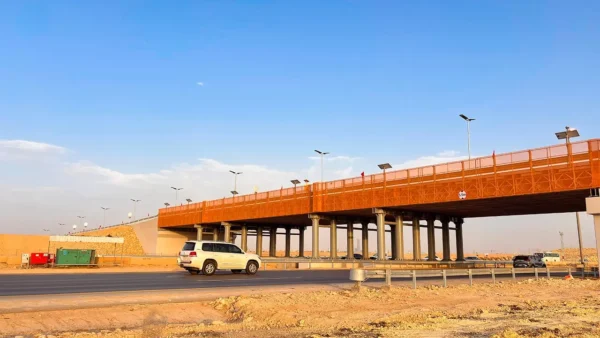
Introduction: Illuminating Cities, Enlightening the Future
Amid accelerating global urbanization and the pressing need for climate action, urban lighting is undergoing a quiet revolution. Municipal lighting is no longer just a tool to dispel darkness; it has become a key indicator of a city’s intelligence, sustainability, and resident well-being. While traditional grid-powered lighting has illuminated our nights, its high operational costs, complex infrastructure, and significant carbon footprint are prompting city decision-makers worldwide to look towards cleaner, more autonomous solutions: Municipal Solar Lighting Projects.
A successful municipal solar lighting project is far more than installing a few lights. It is a strategic undertaking that integrates the principles of Sustainable Infrastructure, rigorous financial planning, and a deep understanding of community needs. It enhances public safety, reshapes the nighttime cityscape, significantly reduces long-term fiscal burdens, and serves as a visible symbol of a city’s green energy transition. However, its success from concept to completion depends on systematic planning and precise analysis. This guide is designed to be your roadmap, leading you through each critical planning phase to ensure your project is not only technically reliable but also economically sound and environmentally responsible.
Phase 1: Needs Assessment & Strategic Planning – Laying the Foundation for Success
Every outstanding project begins with a clear understanding of the “why” and “for whom.” Planning a municipal solar lighting project starts with a meticulous needs assessment.
Scenario-Based Analysis: Lighting Tailored to the Environment
Different public spaces have vastly different lighting requirements:
- Main & Secondary City Roads: Require uniform, sufficient illuminance (typically following standards like IESNA RP-8) to ensure driver and pedestrian safety, reducing accidents. Key considerations include the spacing and height of high-brightness solar street lights.
- Community Parks, Plazas & Green Spaces: Lighting aims to create a comfortable, safe ambiance for leisure, encouraging nighttime social activity. Soft solar garden lights or solar pathway lights can line walkways, complemented by solar flood lights in key areas.
- Bike Paths & Pedestrian Walkways: Require continuous, guiding light for cyclist and pedestrian safety. Solar bollard lights or low-post fixtures are ideal.
- Public Transit Hubs & Parking Lots: Require high levels of vertical illuminance to enhance facial and vehicle recognition, boosting the sense of security. Here, solar street lights or solar wall-pack lights equipped with Smart Lighting Controls (like motion sensors) can achieve significant energy savings.

Key Performance Considerations:
- Illuminance Levels (Lux): Determined by national standards and specific application.
- Required Hours & Backup Days: Must fulfill all-night lighting needs. Design must account for local historical weather data to ensure several days of operation during consecutive cloudy/rainy days. This is core to the reliability of any Off-Grid Lighting Solution.
- Safety & Durability: For areas with higher crime rates or complex foot traffic, selecting fixtures with Vandal-Resistant design is critical. Reinforced housing and tamper-proof fasteners drastically reduce vandalism rates and maintenance costs.
Phase 2: Technical Solution & Product Selection – Building a Reliable System
Once you know “what is needed,” the next step is deciding “how to achieve it.” The core technology of a municipal solar lighting system lies in the synergy of its components.
Deep Dive into Core Components:
- Solar Panel: Photovoltaic conversion efficiency is key. Monocrystalline panels are typically more efficient than polycrystalline, capturing more energy within a limited installation area—especially important in regions with sub-optimal sunlight.
- Energy Storage Battery: This is the heart of the system. Lithium Iron Phosphate (LiFePO4) batteries are becoming the preferred choice for municipal projects due to their longer cycle life (often 2000+ cycles), superior safety profile, and better high-temperature performance. While the initial cost may be higher, their value over the system’s total lifecycle far exceeds that of traditional lead-acid batteries in a true Cost-Benefit Analysis.
- LED Light Source: Advances in LED Lighting Technology are the cornerstone of solar lighting’s viability. Focus on the luminaire’s efficacy (lm/W); higher efficacy means consuming less power for the same brightness. Ensure LEDs are from reliable brands to guarantee long-term lumen maintenance.
- Intelligent Control System: This is the leap from “lighting” to “smart lighting.” Motion sensors can dim lights when no one is present and restore full brightness upon detection, achieving over 50% energy savings. Remote monitoring systems allow for centralized control and fault diagnosis, vastly improving operational efficiency.

System Design & Engineering Calculations:
A robust design must be based on scientific calculation. A professional supplier should perform detailed system configuration calculations based on the project’s latitude/longitude, historical peak sun hours, and your determined load power and backup days. This ensures requirements are met even on the winter solstice. Avoid “rule-of-thumb” configurations, which are often the root cause of project failure.
Phase 3: Lifecycle Cost-Benefit Analysis – Proving a Smart Investment with Data
The key to persuading decision-makers and the public is translating the emotional “green appeal” into a financial “smart decision.” A clear Cost-Benefit Analysis report is indispensable.
Grid-Powered vs. Solar-Powered Lighting: A 25-Year Total Cost of Ownership Comparison
| Cost Item | Traditional Grid-Powered Street Light | Municipal Solar-Powered Street Light | Notes |
|---|---|---|---|
| Initial Investment | Lower | Higher | Includes luminaire, pole, cabling, transformers, trenching (for grid), solar system, etc. |
| Energy Cost (25 yrs) | Very High | Nearly Zero | Assumes rising electricity costs. Solar uses free sunlight. |
| Maintenance Cost (25 yrs) | Medium | Lower | Solar eliminates cable maintenance, meter reading, etc.; cost centers on periodic Battery Replacement (approx. every 5-8 years). |
| Grid Outage Impact | Affected by area blackouts | Fully Immune | Independent operation provides stable Off-Grid Lighting, enhancing urban resilience. |
ROI & Intangible Benefits:
Calculations often show the Return on Investment period for municipal solar lighting projects is between 3 to 6 years. For nearly two decades thereafter, the saved electricity and maintenance costs become direct municipal savings.
More importantly, consider the value that numbers cannot fully capture:
- Environmental Contribution: Each project is a direct contribution to city carbon reduction goals and ESG commitments.
- Safety & Social Benefits: Good lighting is proven to reduce crime rates, stimulate nighttime economic activity, and boost citizen happiness and belonging.
- Rapid Deployment & Flexibility: No complex grid extension is needed, making it ideal for new developments, remote roads, or as an emergency lighting solution to quickly enhance public safety.

Phase 4: Implementation & Long-Term Maintenance – Ensuring Lasting Light
The final step in planning is ensuring the project, once realized, operates efficiently and reliably for decades.
Choosing a Partner: Beyond Product Procurement
When selecting a supplier, view them as a long-term partner for Technical Support and After-Sales Service. Ask these questions:
- Can you provide detailed Installation Guides?
- What is your Warranty Support policy? Is it a comprehensive warranty or are key components covered separately?
- Do you have a robust spare parts supply chain to ensure swift Spare Parts availability and repair response?
- Can you share case studies from similar-scale Municipal Lighting Projects?
Establishing a Preventive Maintenance Plan:
A simple maintenance plan significantly extends system life:
- Regular Inspection (Quarterly/Biannually): Visually check fixtures and panels for damage. Clean dust and debris from solar panel surfaces.
- Performance Monitoring: Use smart system data or manual logs to watch for significant reductions in nightly operation time, an early sign of potential Battery performance decline.
- Planned Replacement: Budget for and schedule Battery Replacement before the expected end of its service life to avoid sudden system failure.

Conclusion: Begin Your Journey to Sustainable Light
Planning a successful municipal solar lighting project is the process of marrying environmental responsibility, fiscal wisdom, and community care. It requires us to examine costs from a total lifecycle perspective, design with systems-thinking, and choose partners with a collaborative mindset.
Take Action Now & Get Your Exclusive Planning Tool:
To help you take the first step, Lumin Solar Solutions has prepared a “Municipal Solar Lighting Project Preliminary Planning Checklist” for city planners. This checklist will guide you in systematically defining needs, assessing sites, and forming an initial technical framework.
To receive your complimentary checklist and schedule a free 30-minute preliminary project consultation with our experts, please contact us via our website form or email [Your Sales Email] with the subject line “Request Municipal Planning Checklist.”
Let Lumin Solar Solutions’ expertise and global project experience be your reliable partner in building a safer, greener, and smarter city. Let’s illuminate a sustainable future together.