Introduction: The High-Stakes Decision for Major Infrastructure
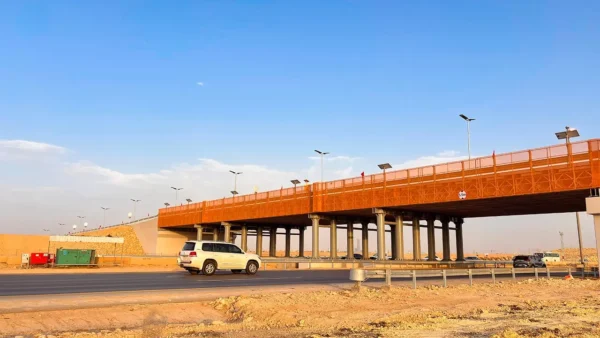
Imagine a newly constructed international port, a multi-million-dollar sports stadium, or a critical stretch of highway infrastructure. The high-mast flood lighting that illuminates these sites is not merely an accessory; it is a vital component of operational safety, security, and functionality. Now, imagine a scenario where, just months after commissioning, a significant batch of these lights begins to fail. The consequences cascade: emergency repairs, work stoppages, safety hazards, cost overruns, and a severe breach of contractual obligations.
This is the profound risk embedded in the seemingly straightforward task of selecting a solar flood light supplier for large-scale projects. When evaluating bids, technical specifications may all appear to “meet requirements,” while price variations can range from 20% to 50%. The central dilemma for project decision-makers—be they contractors, developers, or government agencies—is this: How do you see beyond the marketing claims and the price tag to identify the supplier that genuinely minimizes long-term risk and protects the asset’s value over its entire 15-20 year lifecycle?
This guide moves beyond simple product comparison. It provides a three-dimensional evaluation framework built on Technical Foundations, Evidence Chains, and Service Ecosystems. This framework transforms supplier selection from a price-centric exercise into a strategic risk and value investment analysis.
Dimension 1: The Technical Foundation – Decoding Performance and Durability

The true quality of a solar flood light is engineered into its core components. Superficial specifications like “high brightness” are meaningless without understanding the technology that delivers it reliably.
LED Light Engine: The Heart of Performance
The LED is the soul of the luminaire. Its quality dictates efficiency, light quality, and lifespan.
- Chip Brand and Bin Grade: Insist on transparency. Reputable suppliers will specify the manufacturer of the LED chips (e.g., CREE, Lumileds, Seoul Semiconductor) and their bin grade—a measure of color consistency and performance sorting. Vague claims of “imported chips” are a red flag.
- Luminous Efficacy & Thermal Management: High efficacy (lm/W) is desirable, but only if paired with exceptional heat dissipation. Thermal management is the single greatest factor determining LED lifespan. Examine the heatsink: it should be substantial, made of high-quality aluminum with extensive fin area or incorporate advanced heat-pipe technology. A robust thermal design ensures the LEDs operate at a low junction temperature, preventing premature lumen degradation (light loss).
- Optical Design Precision: For a flood light, the optic (lens or reflector) is what shapes the raw light into a useful beam. A poorly designed optic creates uneven illumination, dark spots, and excessive glare—failing the practical purpose despite high lumen output. Request photometric data (IES files) to verify beam angle, uniformity, and distribution.

Photovoltaic and Energy Storage: The Reliability Backbone
A bright light is useless without consistent power.
- Solar Panel Efficiency and Warranty: High-efficiency monocrystalline panels (≥21%) are standard for professional projects. More importantly, demand the manufacturer’s linear power output warranty (e.g., 90% output after 10 years, 80% after 25 years). This predicts long-term energy yield.
- Battery Technology: Why LFP (LiFePO4) is Non-Negotiable for Large Projects: For critical infrastructure, the battery choice is paramount. Compare technologies:
- Lead-Acid: Low upfront cost, but short lifespan (2-4 years), poor depth of discharge, and high maintenance. Total lifetime cost is high.
- Standard Lithium-ion: Better than lead-acid, but concerns over thermal runaway and moderate cycle life.
- Lithium Iron Phosphate (LFP): The professional choice. Offers superior cycle life (≥2000 cycles at 80% Depth of Discharge), exceptional safety (chemically stable), excellent high-temperature performance, and a longer calendar life. While the initial cost is higher, the Total Cost of Ownership (TCO) over a project’s life is dramatically lower.
Dimension 2: The Evidence Chain – From Claims to Verifiable Proof
A trustworthy supplier doesn’t just make promises; they provide objective, third-party validation of their product’s capabilities and durability.

Mandatory Certifications & Testing Reports:
Certifications are the baseline; detailed test reports are the evidence.
- Fundamental Certifications: CE (EU safety), RoHS (restriction of hazardous substances) are minimum requirements. ISO 9001 certification indicates a structured quality management system.
- Critical Third-Party Test Reports:
- Photometric Test Report: Verifies luminous flux (lumens), efficacy, color temperature, and CRI—confirming the product matches its datasheet.
- Ingress Protection (IP) Test Report: For outdoor flood lights, IP66 or IP67 is essential, proving protection against powerful water jets and dust ingress. Request the actual test certificate.
- Impact Resistance (IK) Test Report: IK08 or IK10 rating proves resilience against vandalism or accidental impacts, crucial for publicly accessible infrastructure.
- Environmental Reliability Tests: Reports for high/low temperature operation, humidity freeze, and salt spray corrosion (especially for coastal projects) are indicators of robust engineering.
Manufacturing Process & Quality Control:
Scale and process matter. Inquire about the production facility’s capacity, automation level, and quality control checkpoints (e.g., automated optical inspection for solder joints, potting process for waterproofing). The ability to provide consistent quality across thousands of units is as important as the design of a single unit.
Dimension 3: The Service & Support Ecosystem – Lifelong Project Partnership
The relationship with your supplier begins after the purchase order. For a project lasting decades, the supplier’s support infrastructure is a critical part of the product.
Warranty Analysis: The Devil is in the Details
Scrutinize the warranty document. Avoid vague “5-year warranty” statements.
- Component-Breakdown: A professional warranty will specify different terms for different components: LED module (e.g., 5 years), driver (5 years), battery (e.g., 3-5 years for LFP), solar panel (10-25 years), and housing.
- Terms and Logistics: What is the claim process? Is it “repair” or “replace”? What is the turnaround time? For international projects, how are replacements shipped and customs handled? Who bears the cost?
Technical Support Hierarchy:
- Pre-Sales & Design Support: Can they provide lighting layout simulations, detailed installation guides, and custom wiring diagrams?
- Implementation Support: Is there dedicated project management and accessible engineering support during installation?
- Post-Sales & Maintenance: Is there a 24/7 technical hotline? Do they offer remote diagnostics? Most critically: what is their spare parts supply chain strategy? Are critical components like batteries and LED modules guaranteed to be available for 10+ years?

Customization and Engineering Collaboration (OEM/ODM):
Large projects often have unique requirements. Evaluate the supplier’s OEM/ODM capability. Can they adapt mounting structures, adjust power output, integrate specific sensors, or modify control protocols to seamlessly fit your project’s design?
The Decision Matrix: Translating Theory into Action
To systematically evaluate potential partners, use a scoring model. Rate each supplier (1-5) on the following criteria:
| Evaluation Category | Key Questions / Criteria | Weight |
|---|---|---|
| Technical Foundation | LED chip brand & thermal design? LFP battery? Optical data provided? | 30% |
| Evidence Chain | Full suite of IP/IK/environmental test reports? Transparent manufacturing? | 25% |
| Service Ecosystem | Clear, component-specific warranty? Global support network? Spare parts guarantee? | 25% |
| Project Provenance | Verifiable references from similar scale/application projects? | 15% |
| Commercial Stability | Company history, financial health, and production capacity? | 5% |
| Total Score (Price considered AFTER this score) | 100% |
The Golden Rule: Select the supplier with the highest cumulative score, not the lowest initial price. The score represents your investment in risk mitigation and long-term value preservation.
A Warning: The True Cost of the “Lowest Bid”
Choosing a supplier based solely on price is a high-risk gamble. The “savings” can evaporate and multiply into massive losses:
- Scenario 1: Premature, widespread LED failure 2-3 years into the project, necessitating a complete system replacement at 2-3x the original “savings,” plus labor and reputational damage.
- Scenario 2: Battery bank failure in a remote location, causing a security blackout and requiring emergency air-freight replacement at exorbitant cost.
- Scenario 3: The supplier disappears or fails to honor warranty claims, leaving you solely liable to the end-client for rectification work.
You are not simply purchasing a product; you are investing in the probability of trouble-free operation for the design life of your asset.

Conclusion & Call to Action: Partner for the Long Haul
For large-scale infrastructure projects, solar flood lighting is a capital asset, not a consumable. Your supplier should be a strategic partner capable of sharing risk and responsibility over the asset’s entire lifecycle.
Equip Yourself with a Professional Assessment Tool
We have distilled the principles in this guide into a practical, actionable document: 《Large-Project Solar Lighting Supplier Due Diligence Checklist》.
This comprehensive checklist provides you with:
- A step-by-step questionnaire for evaluating technical specifications.
- A mandatory document request list for certifications and test reports.
- A detailed warranty clause analysis guide.
- A scoring template to objectively compare potential partners.
To receive your copy, contact our project solutions team with the subject line “Supplier Checklist.”
Request the Due Diligence Checklist View Major Project Case Studies
Alternatively, email [Your Project Team Email] with “Supplier Checklist” in the subject line.
Choose a partner who invests in your project’s future as much as you do. Let Lumin Solar Solutions’ decade of experience in global mega-projects inform your most critical procurement decisions.